

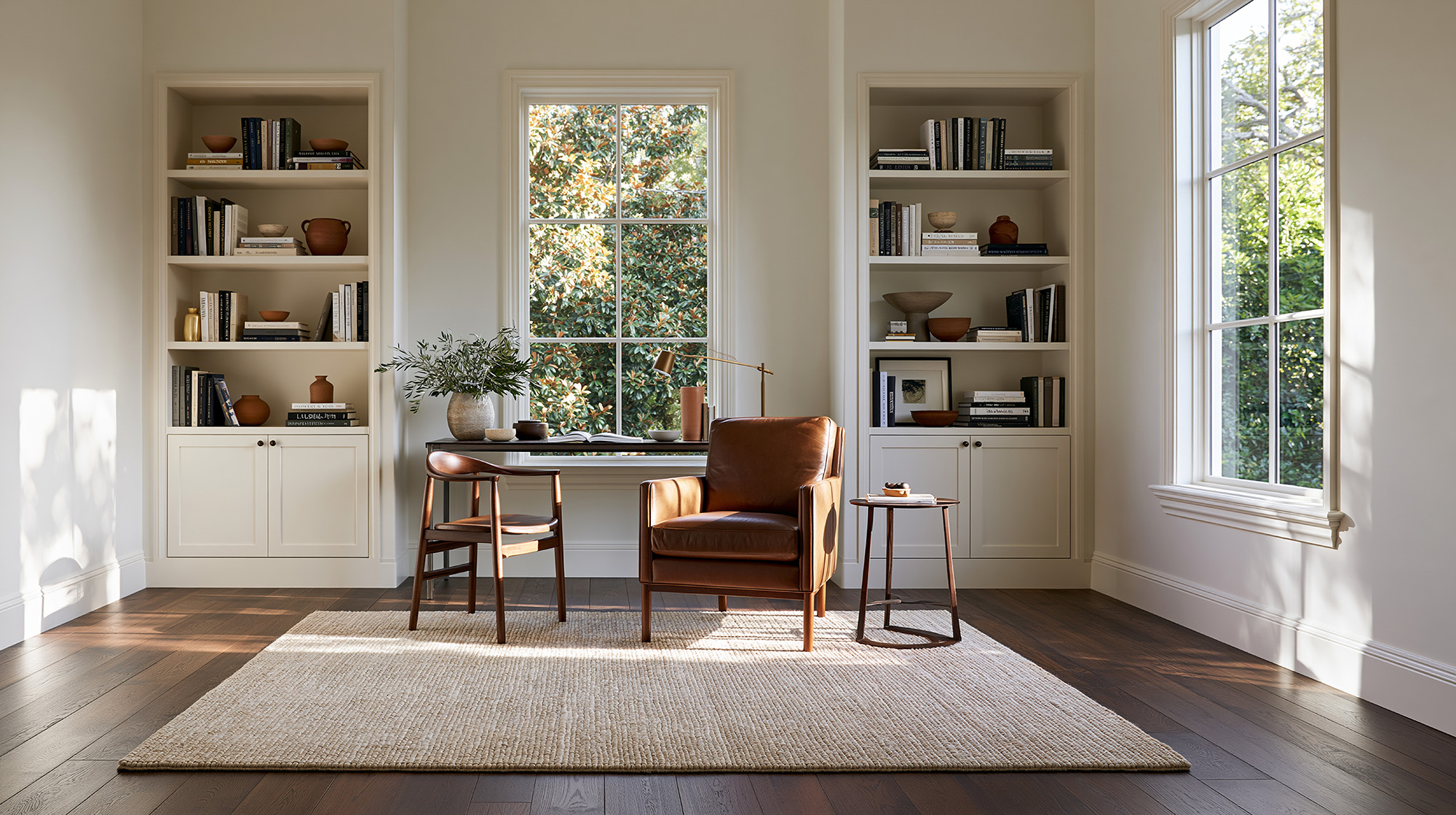
Marine fog off the Strait of Juan de Fuca, wet winter boots coming in from Olympic National Park trails, and dry furnace air running from October through April put wood floors through real seasonal swings. The choice between solid and engineered hardwood comes down to how each plank is built beneath the surface—and whether it stays flat or gaps and cups over time.
Both options feature genuine, natural hardwood on the walking surface, yet their internal construction responds very differently to coastal humidity and subfloor moisture. A clear look at how solid planks and layered engineered boards behave across North Olympic and Kitsap Peninsula homes makes it much easier to pick the right floor for your specific foundation, room layout, and daily routine.
How Wood Responds to Peninsula Moisture Swings
Wood is a natural cellular material that absorbs moisture when indoor humidity rises during rainy Puget Sound winters and releases moisture when baseboard heaters or wood stoves dry out the air. Across our peninsulas, indoor conditions shift dramatically between damp marine air in Port Angeles or Bremerton and drier winter days in Sequim's rain shadow.
When a wood plank takes on moisture across its width, it swells slightly; when the air dries out, it shrinks back. If one side of a board absorbs moisture faster than the other—such as damp air rising from a crawlspace beneath a dry living room—the edges curl upward in a process called cupping. How each hardwood type manages that seasonal expansion is what separates solid planks from engineered boards.
Solid Hardwood Construction and Where It Performs Best
Solid hardwood is milled from a single, three-quarter-inch-thick piece of timber—such as white oak, hickory, maple, or Douglas fir—with tongue-and-groove edges cut directly into the solid wood. Because the entire plank is one continuous piece of lumber, it reacts directly to changes in surrounding humidity and temperature.
Strengths of Solid Tongue-and-Groove Planks
Solid hardwood brings traditional longevity and an unmistakable underfoot feel that suits historic Port Townsend Victorians and classic coastal Craftsman homes. With three-quarters of an inch of solid timber above and below the tongue, you can sand and refinish a solid wood floor multiple times over several decades, changing stain colors or buffing out deep dog scratches years down the road.
Where Solid Hardwood Fits Best—and Where It Struggles
Solid planks perform reliably on main and upper floors built over dry, well-ventilated plywood subfloors where indoor humidity stays relatively steady year-round. Solid wood is not approved for installation directly over concrete slabs, below-grade daylight basements, or hydronic radiant heat systems. Wide solid boards—anything five inches or wider—also experience greater seasonal expansion across the plank width during wet coastal winters, increasing the risk of visible gaps once heating season begins.
Engineered Hardwood Construction and Dimensional Stability
Engineered hardwood uses a real hardwood veneer—typically white oak, hickory, walnut, or maple—bonded over a cross-layered core of high-density plywood or multi-ply birch. Each core layer runs perpendicular to the layer above it, locking the wood fibers in opposing directions.
Why Layered Cores Resist Cupping and Gapping
Cross-grain construction counteracts wood's natural urge to expand and contract with seasonal moisture swings. When damp marine air rolls off Hood Canal or dry air circulates from a forced-air furnace, the opposing plywood layers hold the board flat and stable. That dimensional stability lets you install wider seven- or nine-inch planks—a signature look in Pacific Northwest contemporary homes—without worrying about pronounced winter gaps between boards.
Wear Layer Thickness and Future Refinishing
Not all engineered hardwood carries the same lifespan, and the difference comes down to the thickness of the real wood top layer, known as the wear layer. Entry-level engineered boards with a paper-thin veneer cannot be sanded if they suffer deep gouges. Look for engineered planks with a thick sawn wear layer of three to four millimeters or more; these boards deliver the same authentic grain and surface durability as solid timber and can be professionally screened or sanded one to two times over their life.
Installation Methods: Nail-Down, Glue-Down, and Floating
Your home's subfloor construction—whether a raised wood crawlspace, a concrete slab, or a single-level ranch foundation—often narrows down your hardwood choice right away:
Nail-Down or Staple-Down (Solid and Engineered): Fasteners driven directly into a structural plywood subfloor create a quiet, rock-solid feel underfoot. Solid hardwood relies strictly on nail-down installation above grade, while thick engineered planks can also be nailed or stapled down over wood subfloors.
Full-Spread Glue-Down (Engineered Only): Moisture-barrier adhesive bonds engineered planks directly to a concrete slab, eliminating hollow sounds and blocking slab vapor from reaching the wood. Glue-down installation works well in waterfront slab homes and daylight basements.
Floating Installation (Engineered Only): Tongue-and-groove engineered planks lock together over an acoustic underlayment pad so the floor expands as a single unit without fasteners or glue. Floating floors speed up installation over existing subfloors and pair smoothly with radiant floor heating systems.
Matching Wide Planks and Matte Finishes to Northwest Homes
Once you choose between solid and engineered construction, surface texture and sheen determine how well your new floor holds up to everyday peninsula living. High-gloss polyurethane finishes act like a mirror, highlighting every pine needle, muddy paw print, and fine grit particle tracked in from coastal trails.
Satin, matte, and wire-brushed finishes diffuse soft overcast daylight across the room while hiding everyday scuffs and pet claw marks. Wide European white oak and rustic hickory planks in warm natural, honey, or raw-timber tones complement cedar beams, painted Craftsman trim, and large water-facing windows without darkening your living room during cloudy winter months.
Choose the Right Hardwood Construction for Your Home
Both solid and engineered hardwood options bring genuine wood character—your home's foundation, plank width preference, and moisture exposure decide which performs best over time. Strait Floors carries solid tongue-and-groove planks and thick-wear-layer engineered hardwood across our North Olympic and Kitsap peninsula showrooms, saving you a ferry ride across Puget Sound to compare real boards in person. Our local specialists help you check subfloor moisture, match plank widths and matte finishes to your lighting, and schedule dependable installation—contact us today to start your hardwood project or stop by your nearest showroom to see samples up close.


